
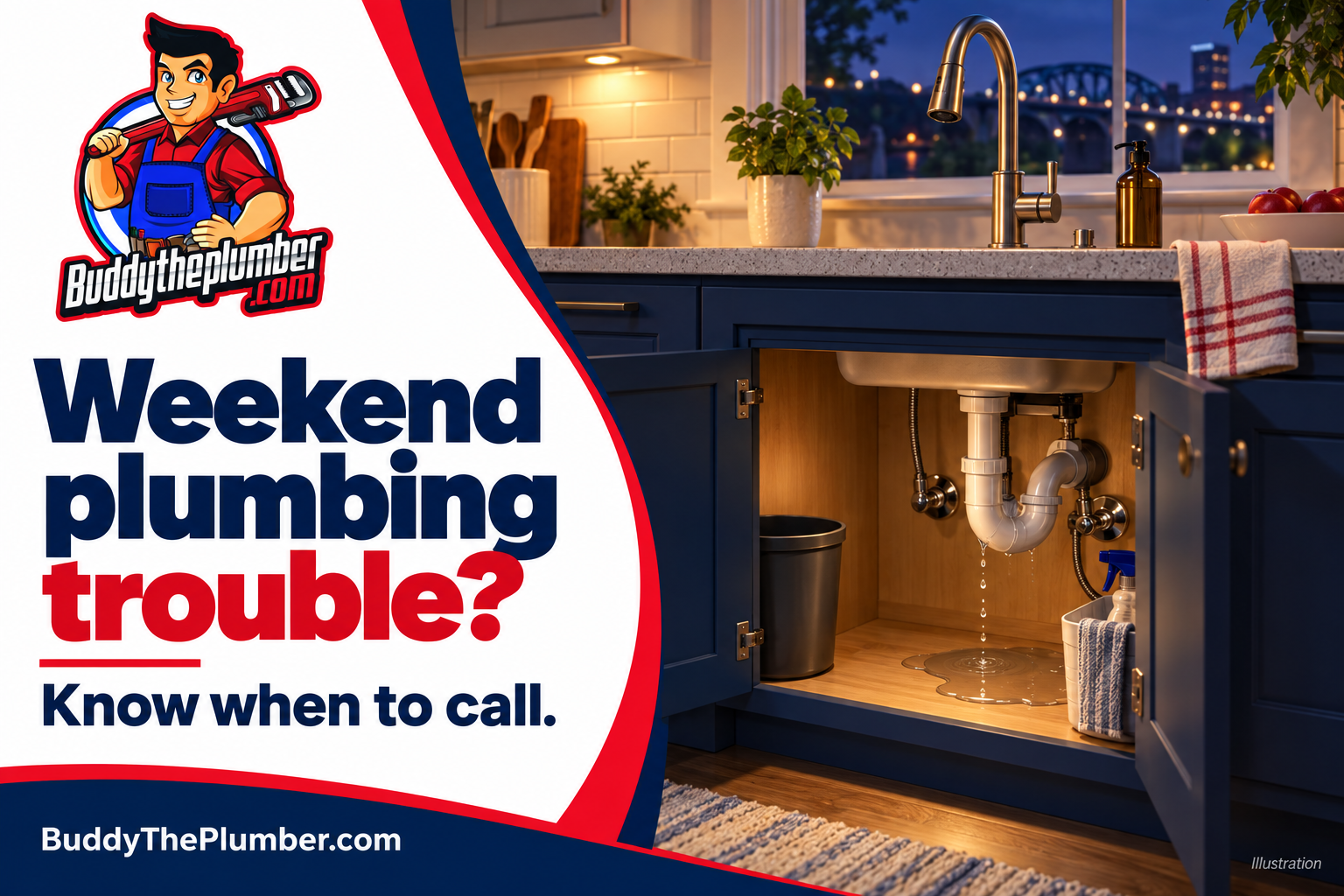
It’s Friday evening. Dinner is underway, the weekend is finally here—and now there’s water under the sink. Do you need help tonight, or can you stop using that sink and arrange a repair?
The answer depends less on the day of the week and more on three things: Is anyone in danger? Is damage continuing? Can the affected plumbing be safely taken out of use? Here’s a practical way for Chattanooga homeowners to think through that decision.
The short answer: don’t wait on danger or spreading damage
Active flooding, sewage coming back into the home, and leaks reaching ceilings, walls, or electrical equipment need prompt attention. A small problem may be less urgent only when it is safely isolated, no damage is continuing, and you have another usable fixture. If you cannot tell which situation you have, call for guidance rather than guessing.
When to call for help now
Water is spreading—and you cannot safely stop it
A burst supply line, an expanding puddle, or water running into another room is not a “check it Monday” situation. If you know the correct water shutoff and can reach it safely, close it without forcing a stuck valve. Then call. If there is electrical danger, a sagging ceiling, or an unsafe route to the valve, keep people away and get appropriate emergency help first.
Sewage is backing up, or several drains are affected
A toilet backing up into the shower, wastewater appearing in a floor drain, or several fixtures backing up together can signal a problem beyond one fixture. Stop household water use—including laundry and the dishwasher—and call a plumber. Keep children and pets away from contaminated water. Repeated flushing or running more water to “test it” can make the mess worse.
You have lost an essential service
A home with one unusable toilet and no alternative is different from a house with a second working bathroom. No water throughout the home also deserves a prompt call: check your water utility’s outage notices, and ask for help if the cause is unclear. Explain any household needs that make waiting difficult. A phone conversation can help establish the next step without assuming every problem needs the same response.
What may be able to wait for a scheduled repair?
“Less urgent” does not mean “ignore it.” These examples may allow a scheduled visit, provided there is no safety concern, the situation is stable, and you can leave the affected fixture unused:
- A faucet dripping into the sink: no water is escaping into the cabinet, wall, or floor, and the drain is clear.
- One slow sink: other fixtures drain normally, nothing is backing up, and you can stop using that sink.
- A running toilet: its water supply can be safely shut off, there is no leak onto the floor, and another toilet is available.
A bucket under a leak is not a dependable weekend repair. It can overflow while you sleep or leave the house. If a leak continues, cannot be isolated, or starts reaching building materials, reassess and call promptly.
Three weekend situations—and why the details matter
“The kitchen sink leaks only when we use it.” Stop using it, including any connected dishwasher, and describe that pattern when you call. Don’t assume the leak is harmless because it is intermittent.
“The toilet overflowed, but the water has stopped.” Do not flush again to test it. Tell the plumber whether other drains are affected and whether you have another working toilet.
“We have no hot water, but everything looks dry.” A loss of hot water is different from a water heater actively leaking. Call to discuss symptoms and household needs. Don’t remove panels, repeatedly reset controls, or attempt gas or electrical repairs. Any gas odor or alarm changes the situation to a safety emergency.
Make the call useful
When you call Buddy the Plumber at 423-401-9009, start with your location, what is happening, whether water is still escaping, and whether one fixture or several are affected. Mention any shutoff you have used and whether the home still has usable water and a toilet.
Ask about current availability, the next step, and any after-hours service or diagnostic charges before a visit is arranged. Response timing depends on the situation and availability; this guide is not a promise of a particular arrival time.
Weekend plumbing questions, answered
Can a plumbing leak wait until Monday?
Not if water is continuing to damage the home, the source is unknown, or there is a safety risk. A safely isolated problem with no continuing damage may allow a scheduled repair. When uncertain, call and describe the symptoms.
Should I shut off all the water for one leaking fixture?
A working fixture shutoff may isolate a supply-side leak without shutting off the entire house. If the leak continues or its source is unclear, the main shutoff may be needed. Only operate a valve you can identify and reach safely; do not force it.
Does shutting off the water stop a sewer backup?
Not necessarily. Stopping your household water use avoids adding more wastewater, but sewage can still enter from a downstream or shared-line problem. Keep away from the backup and get professional help.
Should I use drain cleaner before calling?
Avoid adding chemical drain cleaner to a blocked or backing-up fixture. If you already used a product, tell the plumber exactly what it was before any work begins. Never mix cleaning chemicals.
What should I do if the situation gets worse while I’m waiting?
Call back with the change. Keep the fixture out of use and stay clear of unsafe areas. For immediate danger, suspected gas leaks, or a carbon monoxide alarm, leave and call 911 from safety.
Save Buddy’s number before you need it
Whether you’re in Chattanooga, Hixson, Red Bank, East Ridge, Ooltewah, Harrison, Soddy Daisy, or Signal Mountain, having a clear description of the problem helps us understand what you need. Call 423-401-9009 to discuss plumbing help and current availability.
Already arranged a visit? Our Chattanooga emergency plumbing checklist covers preparing for the plumber’s arrival. For a planned repair, read five questions to ask before a plumbing repair.
This guide offers general information, not a diagnosis of your home. For broader flood preparedness, see the American Red Cross flood safety guidance.
