Is Your Water Pressure Too High?
Chattanooga Water Pressure Problems: Causes, PSI Limits, Warning Signs, and Solutions
By Buddy the Plumber – Chattanooga, Tennessee
Water pressure problems are one of the most common plumbing issues homeowners experience in Chattanooga. While strong water pressure can make showers feel great, pressure that is too high can quietly damage pipes, fixtures, and appliances over time.
Many homeowners do not realize their plumbing system is under stress until they begin experiencing leaks, dripping faucets, failing appliances, or banging pipes.
Understanding your home’s water pressure can help prevent expensive plumbing repairs and extend the life of your plumbing system.
Quick Answer: What Should Water Pressure Be in Chattanooga Homes?
Most homes should have water pressure between 50 and 70 PSI.
Pressure above 80 PSI is considered too high and can damage plumbing systems over time.
High water pressure can cause:
- Pipe leaks
- Water heater damage
- Faucet and fixture wear
- Toilet valve failures
- Appliance supply line leaks
A plumber can test your water pressure in just a few minutes using a pressure gauge. If pressure is too high, the problem is usually corrected with a pressure reducing valve (PRV).
Why Water Pressure Matters
Water pressure affects every part of your home’s plumbing system.
When pressure is too high, it places constant stress on pipes, fittings, valves, and appliances. This stress may not cause immediate damage, but over time it can lead to:
- Hidden pipe leaks
- Faucet drips
- Toilet problems
- Appliance damage
- Water heater issues
Many plumbing failures that seem unrelated are actually caused by excessive water pressure.
What Is Normal Water Pressure for a Home?
The recommended water pressure range for most residential plumbing systems is:
50–70 PSI
Water Pressure Guide
| PSI Level | Meaning |
|---|---|
| Below 40 PSI | Low pressure |
| 50–70 PSI | Ideal residential pressure |
| 70–80 PSI | Slightly high but usually manageable |
| Above 80 PSI | Too high and should be corrected |
Pressure above 80 PSI can begin damaging plumbing components.
Why Chattanooga Homes Often Have High Water Pressure
High water pressure is fairly common in the Chattanooga area.
Several factors contribute to this issue.
Municipal Supply Pressure
Water utilities often supply water at higher pressure to ensure homes at higher elevations receive adequate flow.
Elevation Differences
Chattanooga and surrounding communities have varying elevations, which can lead to higher water pressure in some areas.
Missing or Failing Pressure Reducing Valves
Some homes lack a functioning pressure reducing valve (PRV) or the valve may have failed over time.
Older Plumbing Systems
Older homes may have never had their water pressure tested or regulated properly.
Signs Your Water Pressure Is Too High
Some homeowners notice clear warning signs, while others experience no symptoms at all.
Common signs of excessive water pressure include:
- Banging or hammering pipes
- Dripping faucets
- Toilets that run frequently
- Appliances failing sooner than expected
- Water heater relief valve issues
- Vibrating pipes
- Leaks around valves or fixtures
Sometimes the only way to know for sure is to test the pressure with a gauge.
Can High Water Pressure Cause Leaks?
Yes.
High water pressure places constant stress on plumbing components. Over time, that stress weakens seals, fittings, and pipes.
This can lead to:
- Sink leaks
- Faucet drips
- Toilet valve leaks
- Washing machine hose failures
- Hidden leaks inside walls
If leaks keep appearing throughout a home, excessive pressure may be a contributing factor.
Can High Water Pressure Damage a Water Heater?
Yes.
Water heaters are particularly sensitive to pressure issues.
Excessive pressure can:
- Stress internal components
- Cause relief valve discharge
- Shorten the lifespan of the tank
- Damage plumbing connections
Keeping pressure within the recommended range helps protect water heaters and plumbing systems.
How to Test Water Pressure
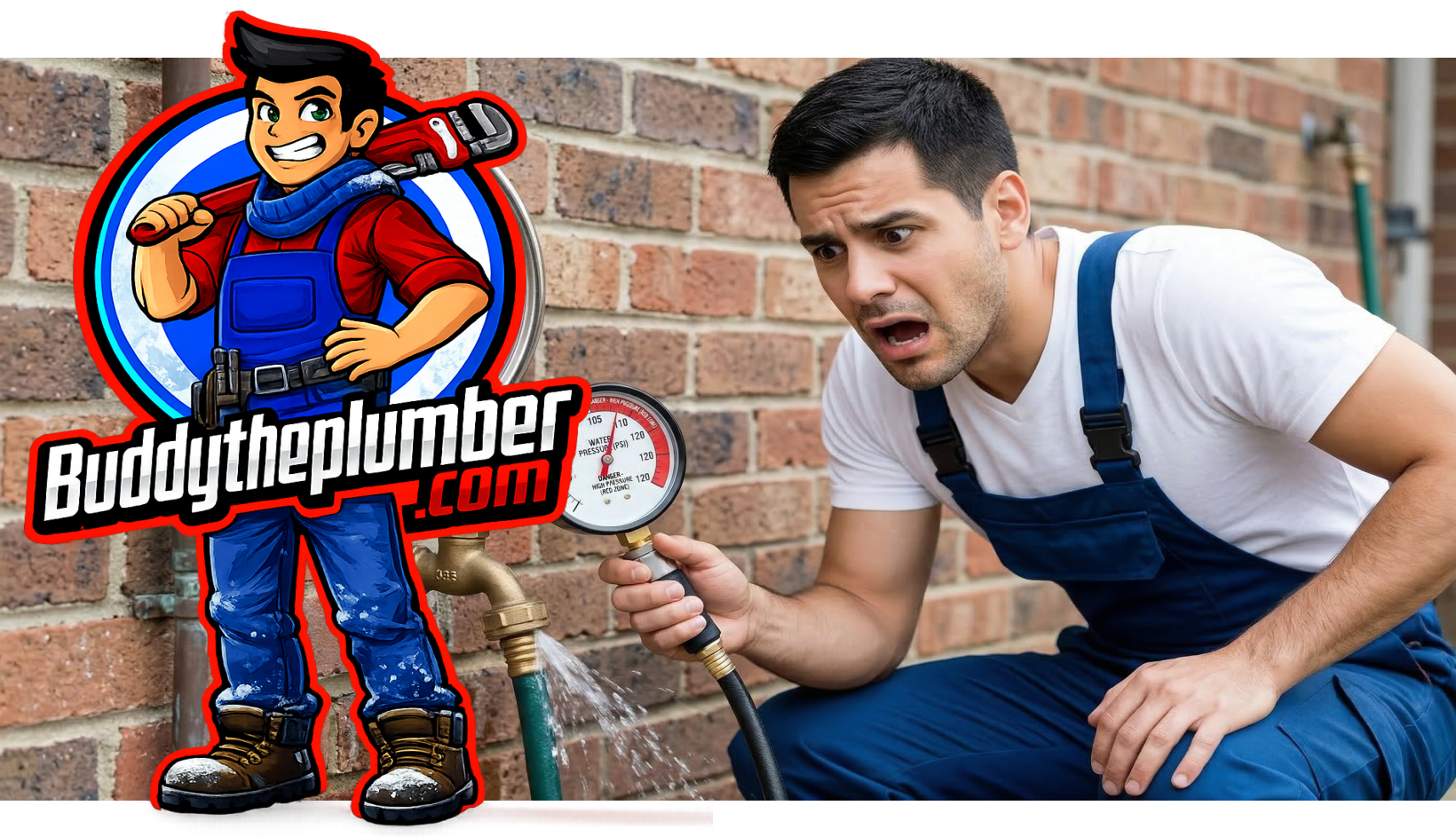
Water pressure can be tested with a simple pressure gauge attached to an outdoor faucet.
Basic testing steps:
- Turn off all water inside the home
- Attach a pressure gauge to an outdoor hose bib
- Turn the faucet fully on
- Read the PSI level
If pressure exceeds 80 PSI, it should be evaluated by a plumber.
What PSI Is Too High for a House?
For most residential plumbing systems:
80 PSI or higher is considered too high.
Many Chattanooga homes measure between 90 and 120 PSI, which can significantly increase the risk of plumbing problems.
How Plumbers Fix High Water Pressure
The most common solution is installing or adjusting a pressure reducing valve (PRV).
A PRV regulates the water pressure entering the home and ensures it remains within safe levels.
A plumber may:
- Test current pressure levels
- Inspect the pressure regulator
- Adjust the PRV
- Replace a failed valve
- Check for additional plumbing issues
Once pressure is properly regulated, the plumbing system experiences less stress and fewer leaks.
Should Chattanooga Homeowners Test Water Pressure?
Yes.
Testing water pressure is a simple step that can prevent expensive plumbing damage.
You should test your pressure if:
- You recently purchased a home
- You hear banging pipes
- Plumbing fixtures keep failing
- Water pressure feels unusually strong
- You have never tested it before
Regular pressure testing can help protect your plumbing system.
